
A dental implant is a small post that is made up of titanium, zirconia, or a combination of the two. It is typically inserted into an empty socket of the gums left by a missing tooth.

Join 1,000's of patients
who trust our care
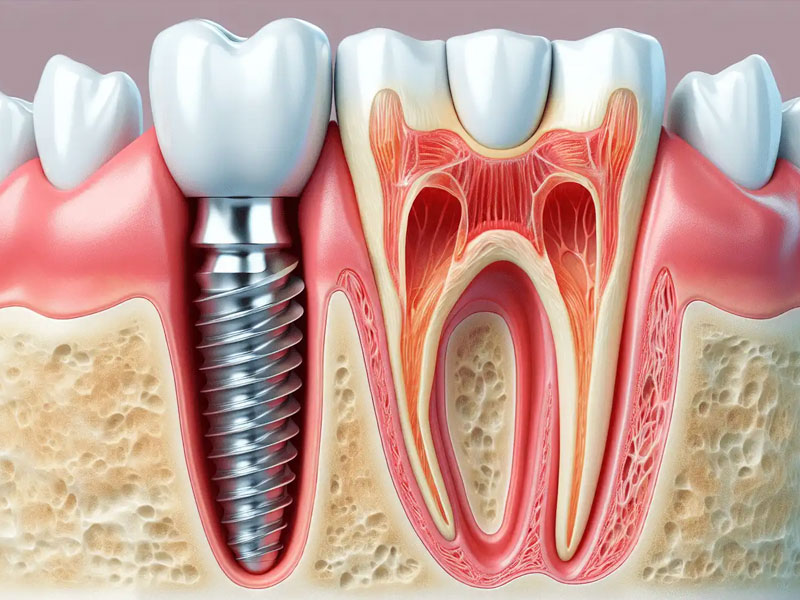
Dental implants are designed to replace missing tooth roots and provide a secure foundation for a dental crown, bridge, or denture. After placement, the implant gradually integrates with the surrounding jawbone, helping create a stable support for your replacement tooth.
When a natural tooth is lost, the surrounding bone may gradually decrease because it no longer receives stimulation from the tooth root. Dental implants can help maintain the structure of the jawbone while restoring the appearance and function of your smile.
A single dental implant can support an individual crown, while multiple implants may be used to support a dental bridge, partial denture, or full-arch restoration. Your dentist will evaluate your oral health and discuss the most appropriate tooth replacement option for your needs.

Dental Implants
Complimentary Consultation
Dental implants at Two Cities Dental in Clovis, CA: A dental implant replaces the root of a missing tooth with a small post, usually titanium, placed in the jawbone. Once it bonds with the bone, it supports a crown, a bridge or a denture. Treatment happens in stages: consultation with X-rays and a scan, implant placement, a healing period of a few months, then the final tooth.
Missing teeth can affect more than the appearance of your smile. They can make chewing more difficult, affect the way your remaining teeth function, and change how you feel about your smile.
At Two Cities Dental, we provide personalized dental implant treatment in Clovis, CA for patients who are looking for a long-term option to replace missing teeth. Dental implants can be used to replace one missing tooth, several missing teeth, or support a larger tooth-replacement solution depending on your oral health and treatment needs.
Because every patient is different, an implant evaluation is important before determining whether dental implants are appropriate for you.
A dental implant is a tooth-replacement solution that uses an implant fixture placed in the jawbone to support a restoration.
A typical implant-supported tooth replacement may include:
A dental implant fixture
An abutment
A dental crown or other restoration
The implant provides support for the replacement tooth while the visible restoration is designed to restore appearance and function.
Dental implants are different from traditional removable dentures and dental bridges because the implant component is positioned within the jawbone.
Dental implants may be considered for adults who have one or more missing teeth and have adequate oral and general health for the planned treatment.
An implant evaluation may consider:
The number of missing teeth
The condition of your remaining teeth
Gum health
Jawbone volume and quality
Your medical history
Oral hygiene habits
Smoking or tobacco use
The location of the missing tooth or teeth
Your overall treatment goals
A dental examination and appropriate imaging can help your dentist evaluate these factors.
Our dental X-rays in Clovis, CA page provides more information about how dental imaging can help evaluate teeth and supporting structures.
When a single tooth is missing, an implant-supported crown may provide an option for replacing that tooth.
Unlike a traditional bridge, an implant-supported replacement does not require relying on neighboring teeth for support in the same way.
The treatment plan depends on the condition of the surrounding teeth and bone, as well as your overall oral health.
Your dentist can compare different options and help you understand the advantages and limitations of each approach.
Patients who are missing several teeth may have multiple treatment options.
Depending on the situation, possibilities may include:
Multiple dental implants
Implant-supported restorations
Dental bridges
Partial dentures
Other customized tooth-replacement solutions
For patients considering removable tooth replacement, our dentures in Clovis, CA page provides additional information about complete and partial dentures.
For some patients, dental implants may also be used to provide additional support for a denture.
Dental implants and dental bridges can both be used to replace missing teeth, but they work differently.
A traditional dental bridge generally uses neighboring teeth to support the replacement tooth or teeth.
A dental implant uses an implant fixture placed in the jawbone to support a restoration.
The best option depends on factors such as:
Number of missing teeth
Condition of neighboring teeth
Bone health
Gum health
Oral hygiene
Treatment preferences
Long-term goals
Learn more about dental crowns and bridges in Clovis, CA to compare another common approach to tooth replacement and dental restoration.
Dentures are removable appliances that can replace multiple missing teeth or an entire arch of teeth.
Dental implants, by contrast, use implant fixtures placed within the jawbone to support a restoration.
Some patients may benefit from traditional dentures, while others may be candidates for implant-supported tooth replacement.
An evaluation is necessary to determine which option is appropriate for your specific situation.
For patients who have lost many or all of their teeth, implants may sometimes be used to help support a denture.
Implant-supported dentures can provide a different approach to traditional removable dentures by using dental implants for additional support.
Whether this option is appropriate depends on factors such as bone availability, oral health, overall health, and the design of the proposed restoration.
Your dentist can discuss whether implant-supported tooth replacement should be considered as part of your treatment plan.
An implant consultation typically begins with a review of your dental and medical history.
Your dentist may evaluate:
Missing teeth
Remaining teeth
Gum health
Bite and jaw relationship
Bone structure
Oral hygiene
Previous dental treatment
Your expectations and treatment goals
Dental imaging may be recommended to provide additional information.
The goal of the consultation is to determine whether dental implants are appropriate and, if so, what type of treatment plan may be suitable.
When dental implants are recommended, the implant fixture is placed into the jawbone as part of the surgical phase of treatment.
After placement, a healing period may be necessary before the final restoration is attached.
The exact timeline varies from patient to patient.
Factors that can affect treatment time include:
Number of implants
Location of the implant
Bone condition
Need for additional procedures
Healing response
Type of final restoration
Your dentist will provide a personalized timeline based on your treatment plan.
Some patients who have been missing teeth for a long period may have experienced changes in the jawbone.
When there is insufficient bone to support an implant in the desired position, additional procedures may sometimes be considered.
Whether bone grafting is necessary depends on the individual patient’s anatomy and treatment plan.
Dental imaging can help your dentist evaluate the supporting structures before implant treatment is planned.
Healthy gums are an important part of maintaining dental implants and natural teeth.
Patients with active gum disease may need appropriate periodontal care before implant treatment is considered.
Good oral hygiene and regular professional dental care remain important after implant treatment.
Our routine dental cleanings in Clovis, CA can help support ongoing oral health and professional preventive care.
Dental implants are not maintenance-free.
You still need to:
Brush your teeth regularly
Clean between your teeth
Follow your dentist’s recommendations
Attend regular dental examinations
Maintain healthy gums
Avoid habits that could damage your teeth or restorations
Our oral hygiene education in Clovis, CA provides additional information about daily oral hygiene and preventive care.
Maintaining healthy tissues around an implant is an important part of long-term implant care.
Sometimes a tooth that cannot be restored needs to be removed before replacement treatment can be considered.
In those cases, oral surgery and tooth extraction in Clovis, CA may be part of the overall treatment process.
Whether an implant can be placed immediately or whether healing is needed first depends on the condition of the tooth, surrounding bone, and other clinical factors.
Dental implants can be used to replace missing front teeth in appropriate candidates.
Because front teeth are highly visible, appearance is an important consideration when planning the restoration.
Your dentist will evaluate the surrounding teeth, gum tissue, bone, bite, and smile characteristics when determining an appropriate treatment approach.
Yes. Dental implants may also be used to replace missing molars and other back teeth.
Replacing missing back teeth can help restore chewing function and maintain a more complete dental arch.
The appropriate solution depends on the number of missing teeth and the condition of the remaining teeth and supporting structures.
A missing tooth can affect the surrounding oral environment.
Depending on the location and number of missing teeth, patients may experience:
Difficulty chewing
Changes in bite
Movement of neighboring teeth
Changes in the appearance of the smile
Increased difficulty maintaining certain areas
Changes in the supporting bone over time
Not every missing tooth requires the same treatment, so an evaluation is important before deciding whether replacement is appropriate.
Dental implant treatment should be considered as part of your overall oral health rather than as an isolated cosmetic procedure.
Before implant treatment, your dentist may need to address other dental concerns such as:
Tooth decay
Gum disease
Broken teeth
Infections
Poor oral hygiene
Other untreated dental problems
For comprehensive care, Two Cities Dental provides family dentistry in Clovis, CA for children, adults, and families.
A damaged tooth does not automatically mean that an implant is necessary.
If you have a sudden dental injury, severe tooth pain, or a broken tooth, the first step is to have the problem evaluated.
Our dental emergency services in Clovis, CA page provides information about urgent dental problems and when prompt evaluation may be appropriate.
Depending on the condition of the tooth, treatment may involve restoration, root canal therapy, extraction, or tooth replacement.
If you have already lost a tooth, you may still have several replacement options.
The appropriate solution depends on your current oral health and treatment goals.
Some patients may consider:
Dental implants
Implant-supported restorations
Dental bridges
Partial dentures
Complete dentures
A comprehensive evaluation can help determine which options should be considered.
After dental implant treatment, maintaining good oral hygiene is essential.
Recommended habits may include:
Use appropriate brushing techniques to clean your natural teeth and implant-supported restoration.
Cleaning between teeth and around the implant area helps remove plaque that a toothbrush may not reach.
Regular dental visits allow your dentist to monitor your natural teeth, gums, implant-supported restoration, and overall oral health.
Avoid chewing on very hard objects or using your teeth to open packages, as these habits can damage natural teeth and restorations.
Your dentist may provide specific instructions based on your implant restoration and individual needs.
Dental implants are designed to provide long-term tooth replacement, but no dental restoration is guaranteed to last forever.
The longevity of an implant-supported restoration can be influenced by:
Oral hygiene
Gum health
Bone health
Bite forces
Smoking or tobacco use
Overall health
Regular professional maintenance
The condition of the restoration
Proper care and regular dental visits are important for maintaining your oral health and implant-supported restoration.
Dental implant treatment involves a surgical procedure, so some temporary discomfort, swelling, or tenderness may occur during recovery.
Your dental team will provide instructions for managing the recovery period based on your specific procedure.
If you have concerns about dental treatment or feel anxious about the procedure, discuss them with your dental team before treatment.
Two Cities Dental also provides comfort-focused dental care in Clovis, CA for patients who experience dental anxiety or want additional support during dental appointments.
Although dental implants can significantly improve the appearance of a smile, their primary role is to replace missing teeth and restore oral function.
For patients interested in improving other aspects of their smile, cosmetic treatment may also be considered.
Two Cities Dental provides cosmetic dental services such as professional teeth whitening in Clovis, CA and Invisalign in Clovis, CA.
A comprehensive consultation can help determine which combination of treatments is appropriate for your goals.
Choosing tooth replacement treatment is an important decision.
At Two Cities Dental, we focus on evaluating your individual oral health, explaining your options, and developing treatment recommendations based on your needs.
Our comprehensive dental services allow implant patients to receive related preventive, restorative, diagnostic, and family dental care in one practice.
Whether you are replacing one missing tooth or considering a more extensive tooth-replacement solution, our team can help you understand the available options.
Dental implants are tooth-replacement devices that use an implant fixture placed in the jawbone to support a dental restoration.
Candidates generally need adequate supporting bone and healthy oral tissues, along with overall health appropriate for the planned procedure. An individual evaluation is necessary.
Yes. A single dental implant can be used to support a replacement crown when appropriate.
Yes. Multiple implants or implant-supported restorations may be considered for patients who are missing several teeth.
Dental implants and dentures serve different purposes. The best choice depends on your oral health, number of missing teeth, bone condition, preferences, and treatment goals.
Treatment time varies. Some patients may require several stages of treatment and healing, while others may have a simpler treatment process.
Dental implants require regular oral hygiene and professional dental care. Patients should continue brushing, cleaning between teeth, and attending dental examinations.
Yes. In appropriate situations, an implant may be placed after an extraction. Timing depends on the condition of the tooth, bone, gums, and overall treatment plan.
Additional treatment such as bone grafting may sometimes be considered. Your dentist can evaluate your bone structure and determine whether additional treatment is appropriate.
The best way to find out is through a comprehensive dental evaluation. Your dentist can assess your oral health and discuss dental implants alongside other tooth-replacement options.
If you are missing one or more teeth and are considering dental implants, Two Cities Dental can evaluate your oral health and discuss your tooth-replacement options.
Our team provides comprehensive dental care in Clovis, CA, including dental implants, crowns and bridges, dentures, oral surgery, preventive care, cosmetic dentistry, and emergency dental services.
Contact Two Cities Dental to schedule an evaluation and learn whether dental implants may be appropriate for your smile and oral health needs.
Can't find what you're looking for? Give us a call at (559) 691-6010 and our friendly dental receptionist will gladly answer any questions you may have.
Dental Implants can develop problems without consistent daily care. The earliest sign of a problem begins with the observation of bleeding. This is known as mucositis. The current scientific evidence suggests that this may be successfully treated and is reversible if caught early. Unfortunately, if it progresses to bone loss, also known as peri-implantitis, the bone loss is not reversible. If peri-implantitis is not treated it can lead to advanced bone loss and the removal of the implant.
During routine visits, your dentist or hygienist can evaluate the gums and tissues surrounding your dental implant, check for signs of inflammation, examine the implant restoration, and assess your bite.
Your dentist may also recommend periodic X-rays when appropriate to monitor the bone supporting the implant. Regular routine cleanings and professional examinations are an important part of maintaining your oral health.
Dental implants may be considered when you are missing one or more teeth because of injury, decay, gum disease, or another dental condition. Whether implants are appropriate depends on factors such as your jawbone, gum health, overall oral health, and treatment goals.
Our dentist will evaluate your teeth and gums and discuss the available options with you. Depending on your situation, alternatives may include dental bridges or dentures.
If there is not enough healthy bone to support an implant, your dentist may also discuss additional treatment, such as a bone graft, before implant placement.
Before receiving dental implants, our dentist will perform a thorough examination and review your dental and medical history. Dental X-rays may be recommended to evaluate the teeth, jawbone, and surrounding structures.
Your dentist will explain the treatment process and provide specific instructions based on your individual needs. Be sure to follow all pre-treatment instructions and tell your dental team about medications, medical conditions, or concerns that may affect your treatment.
Dental implant treatment may involve several stages, depending on your oral health and the number of teeth being replaced. Local anesthesia is commonly used during implant placement to help keep you comfortable.
During the first stage, the implant post is carefully placed into the jawbone at the planned treatment site. The gum tissue may then be closed over or around the implant while the area heals. Over time, the implant can integrate with the surrounding bone and become a stable foundation for your replacement tooth.
After the implant has healed sufficiently, an abutment may be attached. The abutment connects the implant to the final restoration, such as a dental crown, bridge, or denture. Our dentist will determine the appropriate treatment sequence based on your individual case.
For patients who need additional surgical treatment, our oral surgery services may be part of the overall treatment plan.
Following your successful procedure, it is normal to experience some pain, swelling, and minor bleeding and you may be prescribed pain medication and/or antibiotics to control possible infection. Our dentist will sit with you to show you proper cleaning techniques for your new teeth and give you advice on what to eat and drink in the weeks following your procedure. Initially, you might need to stick to soft foods while the implant heals.
In stage one, our dentist places the metal implant into your jawbone under the gum tissue. It needs to be inserted deep into the jawbone, as this will serve as the best anchor for your new tooth. The gums are then stitched back into place. As gum tissue heals, the implant begins to bond with the bone and attach to the gum. The entire healing process may take several months. Contact us if you are feeling anything unusual during the healing process.
The placing of an abutment is also part of the procedure, but it is possible this part of the procedure might need to be done at a later time. The abutment is the piece where the replacement tooth will attach to the implant.
The final stage is placing your replacement tooth or teeth. Getting to this step might require a bit more healing time because your jawbone needs to be strong enough before the new tooth is placed. Our dentist will take impressions to ensure your replacement teeth are an appropriate fit and then insert them following the exact specifications of your case.
Two Cities Dental is at 1305 N Willow Ave Ste 110, Clovis, CA 93619, a short drive from north and central Fresno. The office is open Monday to Friday, 9 AM to 6 PM. Call (559) 691-6010 or book online.
The cost depends on how many implants you need, whether bone grafting is required and the type of crown, bridge or denture placed on top. After a consultation with X-rays, our team gives you a written estimate and explains how insurance and payment options may apply.
Yes. Implant-supported dentures, often called snap-in dentures, attach to a small number of implants so the denture does not slip. Learn more on our dentures page and ask whether this option suits you.
Pick a time and your preferred dentist. We'll text or call you to confirm.
We are a family-owned & operated dental office serving the great two cities of Fresno & Clovis.
© 2026 Two Cities Dental in Fresno/Clovis. All Rights Reserved.