
A crown is a surface cap that encases the entire tooth, thus restoring it to its original shape and size. Crowns protect the tooth and strengthen its structure; no other type of restoration is able to do this. At Two Cities Dental, our dentists have placed 1000’s of dental crowns and bridges.

Join 1,000's of patients
who trust our care
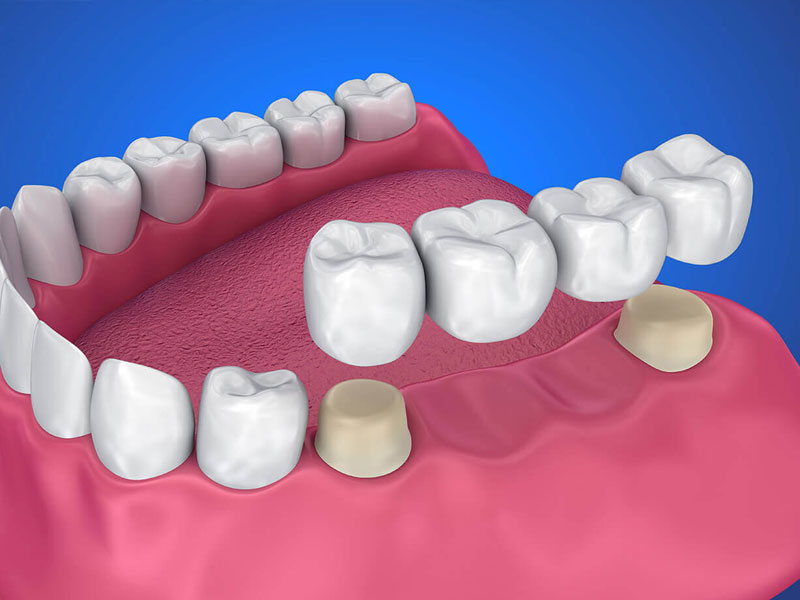
A dental crown is designed to cover the visible portion of a damaged or weakened tooth. Crowns can help restore teeth affected by significant decay, fractures, large fillings, or other structural concerns. Porcelain and other tooth-colored materials can provide a natural-looking appearance that blends with the surrounding teeth.
A crown procedure typically involves preparing the tooth, taking an impression or digital scan, and placing a temporary restoration while the permanent crown is being prepared. At the final appointment, your dentist will check the fit, shape, and bite before securing the permanent crown.
Dental bridges are used to replace one or more missing teeth. A traditional bridge generally uses crowns placed on the teeth next to the gap to support an artificial replacement tooth. Depending on your oral health and treatment goals, other options such as dentures or dental implants may also be considered.

Crowns & Bridge
Looks natural
Damaged or missing teeth can affect how you chew, speak, and feel about your smile. At Two Cities Dental, we provide dental crowns and bridges in Clovis, CA to help restore the appearance, strength, and function of teeth when appropriate.
A dental crown can protect and restore a damaged tooth, while a dental bridge can replace one or more missing teeth by using neighboring teeth for support.
The right restoration depends on the condition of your teeth, gums, bite, overall oral health, and treatment goals. Our dental team can evaluate your smile and explain which options may be appropriate for you.
A dental crown is a restoration designed to cover and protect a damaged or weakened tooth.
Crowns may be recommended when a tooth has lost too much structure to be predictably restored with a traditional filling.
Depending on the situation, a crown may be considered for a tooth affected by:
Extensive decay
A large existing filling
Significant fracture
Structural damage
Severe wear
Certain cosmetic concerns
Damage following root canal treatment
A crown covers the visible portion of the tooth and can help restore its shape and function.
Not every damaged tooth needs a crown. Smaller cavities may be successfully restored with a composite filling when sufficient healthy tooth structure remains.
A crown may be considered when the tooth has been weakened significantly or when a larger restoration is needed.
Your dentist may recommend a crown if:
A large portion of the tooth is missing
A tooth has a significant fracture
A previous filling occupies a large portion of the tooth
The tooth has been weakened after root canal treatment
The remaining tooth structure needs additional protection
A dental examination is necessary to determine whether a filling, crown, or another treatment is appropriate.
A dental bridge is a fixed dental restoration used to replace one or more missing teeth.
A traditional bridge generally consists of an artificial replacement tooth supported by crowns attached to neighboring teeth. The exact design depends on the location of the missing tooth, the condition of the surrounding teeth, your bite, and other factors.
Dental bridges can help restore:
Chewing function
The appearance of your smile
The space created by a missing tooth
Certain speech-related functions
A bridge may be one option when replacing a missing tooth or teeth.
A dental bridge may be considered when one or more teeth are missing and the neighboring teeth are suitable to support the restoration.
Your dentist may evaluate:
The location of the missing tooth
The health of neighboring teeth
Gum health
Bone and supporting structures
Your bite
Your overall oral health
Other available tooth-replacement options
Depending on your circumstances, alternatives may include dental implants or dentures.
Although both are restorative treatments, crowns and bridges serve different purposes.
A dental crown generally restores or protects an existing tooth.
A dental bridge is generally used to replace one or more missing teeth.
For example, a tooth that has extensive decay but remains structurally restorable may need a crown. If a tooth is missing, a bridge may be considered to fill the space.
Your dentist can explain which treatment fits your specific situation.
A tooth that has undergone root canal treatment may require additional protection depending on the amount of remaining tooth structure and the tooth’s location.
Root canal treatment addresses infection or inflammation within the tooth. A crown may subsequently be recommended to restore the tooth and provide additional structural protection.
Learn more about:
Root Canal Treatment in Clovis
The need for a crown after root canal treatment varies depending on the individual tooth and clinical circumstances.
A damaged tooth may sometimes be restored with a crown, depending on the location and severity of the fracture.
If you suddenly break or damage a tooth, avoid chewing on the affected side and contact your dentist for an evaluation.
If the damage is accompanied by severe pain, swelling, bleeding, or other urgent symptoms, review our information about:
Emergency Dental Care in Clovis
Prompt evaluation can help determine whether the tooth can be restored and what treatment may be appropriate.
The crown procedure depends on the type of restoration and the condition of the tooth.
A typical process may include:
Your dentist examines the tooth and evaluates the surrounding teeth and gums. Dental X-rays may be recommended when additional information is needed.
Learn more about digital dental X-rays.
Your dentist determines whether a crown is appropriate and discusses the available restoration options.
When a crown is indicated, the tooth is prepared to provide space for the restoration and an appropriate foundation.
Depending on the technology and procedure used, information about the prepared tooth is obtained to create the restoration.
The crown is fabricated to fit the prepared tooth and coordinate with your bite.
The restoration is checked for fit, appearance, and bite before being placed.
The exact process and number of appointments can vary depending on the type of crown and your individual treatment plan.
Some patients may be able to receive a dental crown in a single visit when the appropriate technology, tooth condition, and clinical circumstances allow.
Two Cities Dental offers in-office crown technology designed to streamline the restoration process for eligible cases.
Whether a same-day crown is appropriate depends on the tooth, the required restoration, and your individual treatment needs. Your dentist can explain the available options after evaluating your tooth.
The bridge process typically involves evaluating the missing tooth or teeth and the neighboring teeth that may support the restoration.
The dentist may:
Examine the missing-tooth area
Evaluate the supporting teeth
Assess your bite
Take appropriate diagnostic images
Prepare the supporting teeth when necessary
Obtain information needed to fabricate the bridge
Check the bridge for fit and function
Place and adjust the restoration
Your dentist will explain the expected process before treatment begins.
Both bridges and implants can be used to replace missing teeth, but they work differently.
A dental bridge generally uses neighboring teeth for support.
A dental implant is placed into the jawbone and can support an individual crown or another type of restoration.
You can learn more about:
The appropriate option depends on factors such as your oral health, bone support, neighboring teeth, treatment goals, and overall circumstances.
Dentures are removable dental appliances that can replace multiple missing teeth or, in some cases, an entire arch of teeth.
Bridges are generally fixed restorations supported by teeth or, depending on the design, implants.
Learn more about:
Your dentist can discuss the advantages, limitations, maintenance requirements, and expected process for each option.
Crowns and bridges require regular oral hygiene just like natural teeth.
To help maintain your restoration:
Brush twice a day
Clean between your teeth
Follow your dentist’s recommendations for cleaning around the restoration
Limit frequent sugary foods and drinks
Avoid using your teeth to open packages
Attend regular dental examinations
Have professional dental cleanings as recommended
Contact your dentist if the restoration becomes loose, damaged, or painful
Our oral hygiene education page provides additional information about maintaining healthy teeth and gums.
The lifespan of a crown or bridge varies from patient to patient.
Factors that can affect the longevity of a restoration include:
Oral hygiene
Gum health
Bite forces
Teeth grinding or clenching
The condition of supporting teeth
Diet and lifestyle
Regular dental care
The size and location of the restoration
A restoration should be evaluated during routine dental examinations. If a crown or bridge becomes loose, damaged, or uncomfortable, contact your dental office for an evaluation.
If a crown or bridge becomes loose or falls out, contact your dentist.
Until you receive professional advice:
Keep the restoration in a safe place if it has come completely out
Avoid chewing hard foods on the affected side
Keep the area clean
Avoid attempting permanent repairs yourself
Contact the dental office for instructions
If you have significant pain, swelling, bleeding, or signs of infection, the situation may require prompt evaluation.
See our emergency dental care information for additional guidance.
Crowns and bridges are part of comprehensive restorative dentistry and may be used to address different dental problems.
For families who need ongoing dental care, preventive treatment remains important even after receiving a restoration.
Regular dental cleanings and dental examinations can help your dental team monitor your crowns, bridges, natural teeth, and gums.
For children and younger patients, our children’s dentistry services focus on preventive care and age-appropriate treatment.
A missing tooth can affect more than appearance. Depending on its location, it may affect chewing, speech, and the way surrounding teeth interact.
Treatment options may include:
Dental bridges
Dental implants
Partial dentures
Complete dentures for more extensive tooth loss
There is no single replacement option that is appropriate for everyone.
A dental examination can help determine which options may be suitable based on your oral health and treatment goals.
If you have a damaged tooth, a large filling, a missing tooth, or a restoration that needs evaluation, Two Cities Dental can assess your oral health and discuss appropriate restorative options.
Our dental team provides dental crowns and bridges in Clovis, CA, along with preventive, restorative, emergency, and cosmetic dental services.
Contact Two Cities Dental to schedule an appointment and learn whether a dental crown, bridge, implant, filling, or another treatment may be appropriate for your smile.
Can't find what you're looking for? Give us a call at (559) 691-6010 and our friendly dental receptionist will gladly answer any questions you may have.
A dental crown is a restoration that covers a damaged or weakened tooth to restore its shape, function, and appearance.
A dental bridge is a fixed restoration designed to replace one or more missing teeth. Depending on the type of bridge, it may be supported by neighboring teeth or implants.
No. A filling restores a portion of a tooth affected by decay or damage, while a crown covers and protects a larger portion of the tooth. A crown may be recommended when a tooth has more extensive structural damage.
Some teeth may benefit from a crown after root canal treatment, particularly when substantial tooth structure has been lost. The recommendation depends on the individual tooth and its clinical condition.
The time required varies depending on the type of crown, the condition of the tooth, and the technology used. Some eligible cases may be completed in one visit.
Yes. A dental bridge can be used in certain situations to replace a single missing tooth. Your dentist will evaluate the neighboring teeth and other factors before recommending a bridge.
Pick a time and your preferred dentist. We'll text or call you to confirm.

We are a family-owned & operated dental office serving the great two cities of Fresno & Clovis.
© 2026 Two Cities Dental in Fresno/Clovis. All Rights Reserved.