
Any procedure that involves cutting into or removing tissue from your mouth, tooth extraction, or installing a dental implant is considered oral surgery. At Two Cities Dental Office, we have several sedation and comfort aids to help ease the pain.

Join 1,000's of patients
who trust our care
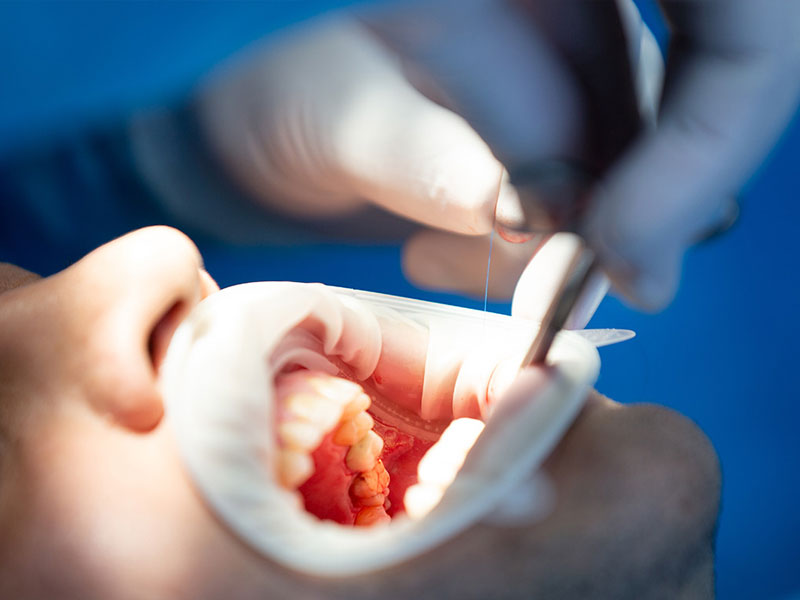
Oral surgery can be an important part of restoring and maintaining your oral health when a tooth, gum, or other oral condition requires treatment beyond routine dental care. At Two Cities Dental, we provide personalized dental evaluations and surgical treatment when appropriate for your individual needs.
Whether you need a tooth extraction, treatment for a severely damaged tooth, or surgical care as part of a larger restorative treatment plan, our dental team can evaluate your condition and explain your options.
If you are searching for oral surgery in Clovis, CA, Two Cities Dental can help you understand your treatment options and determine the appropriate next step for your oral health.

Oral Surgery
Comfort aids available
Oral surgery at Two Cities Dental in Clovis, CA: Our office provides common oral surgery such as simple and surgical tooth extractions and wisdom tooth care, as part of your regular dental care. Each visit starts with an exam and X-rays, the area is fully numbed, and you go home with clear aftercare instructions. If a case needs a specialist, we explain your options.
Oral surgery refers to dental procedures that involve the teeth, gums, jaw, or surrounding oral structures and may require a surgical approach.
Depending on the patient’s condition, oral surgery may be recommended to:
Not every dental problem requires oral surgery. Your dentist will evaluate your teeth, gums, symptoms, and diagnostic images before recommending treatment.
Tooth extraction is one of the most common procedures associated with oral surgery.
A tooth may need to be removed when it is severely damaged, extensively decayed, infected, or otherwise cannot be predictably restored.
Whenever possible, dentists generally evaluate whether a natural tooth can be preserved before recommending extraction. Depending on the condition of the tooth, treatment such as a filling, crown, or root canal may sometimes be considered instead.
Learn more about restorative treatment through our Composite Fillings and Dental Crowns and Bridges services.
Extraction may be considered when a tooth has extensive structural damage or when preserving the tooth is no longer a predictable option.
Potential reasons for extraction include:
The decision to remove a tooth should be based on a thorough dental examination rather than symptoms alone.
A severely damaged or infected tooth can sometimes cause significant pain, swelling, or other urgent symptoms.
If you experience sudden or severe dental symptoms, an urgent dental evaluation may be necessary. Depending on the cause, treatment may involve medication, drainage, root canal treatment, restoration, or extraction.
Visit our Dental Emergencies in Clovis, CA page to learn more about what to do when you have an urgent dental problem.
Not every dental emergency requires surgery.
A dental emergency may be caused by:
Your dentist can determine the cause of the problem and recommend the appropriate treatment.
In some cases, the best treatment may be a root canal or restoration rather than extraction.
Learn more about Root Canal Treatment and how it may help preserve an infected or damaged tooth when appropriate.
Diagnostic imaging can be an important part of planning dental treatment.
Dental X-rays may help your dentist evaluate:
The type of X-ray recommended depends on the dental condition being evaluated.
Learn more about our Dental X-Rays service.
A severely damaged tooth does not automatically need to be removed.
Depending on the extent of the damage, your dentist may consider restorative options such as a composite filling, dental crown, or root canal treatment.
For example, a tooth with significant structural damage may require a crown to protect the remaining tooth structure after the underlying problem has been addressed.
Our Dental Crowns and Bridges page provides more information about restoring damaged teeth.
When the inside of a tooth becomes infected or inflamed, root canal treatment may be an option for preserving the natural tooth.
A root canal removes infected or damaged tissue from inside the tooth and allows the tooth to be cleaned and restored.
In some situations, however, a tooth may be too damaged to restore. Your dentist can evaluate the tooth and explain whether root canal treatment, extraction, or another option may be appropriate.
Learn more about Root Canal Treatment in Clovis.
If a tooth must be removed, the treatment plan should also consider what happens after extraction.
Depending on the location and number of missing teeth, tooth replacement options may include:
Replacing missing teeth may help restore chewing function and maintain the overall appearance of the smile.
Learn more about Dentures and Prosthesis or explore Dental Implants in Clovis, CA.
Tooth extraction and dental implant treatment may sometimes be part of the same overall treatment plan.
For example, when a tooth cannot be saved, it may need to be removed before a replacement tooth can be considered.
Dental implants are designed to replace missing tooth roots and can support a replacement tooth, bridge, or implant-supported restoration.
Not every patient is a candidate for every type of implant treatment. A dental evaluation is necessary to assess the condition of the gums, jawbone, remaining teeth, and overall oral health.
Before an oral surgery procedure, your dentist will review your dental and medical history and evaluate the area being treated.
Depending on the procedure, you may receive instructions regarding:
It is important to follow the specific instructions provided by your dental team.
After an extraction, the mouth needs time to heal.
Your dentist may provide instructions regarding:
The exact recovery experience varies depending on the tooth removed and the complexity of the procedure.
If you experience symptoms that concern you after treatment, contact your dental office for guidance.
Some patients feel anxious about dental procedures or are concerned about discomfort.
At Two Cities Dental, your dentist can discuss your concerns before treatment and explain the steps involved in your procedure.
Depending on the treatment and individual circumstances, comfort-focused options may be available.
Learn more about our Comfort Aid service.
Children and teenagers may occasionally require tooth removal or other surgical dental treatment.
Because children’s teeth and jaws are still developing, treatment should be carefully evaluated based on age, tooth development, oral health, and the reason for treatment.
If your child requires dental treatment, visit our Children’s Dentistry page to learn more about comprehensive dental care for children.
Not every dental problem can be prevented, but consistent preventive dental care can help identify problems before they become more serious.
Regular dental examinations can help your dentist monitor:
Professional cleanings are also an important part of maintaining oral health.
Learn more about Routine Dental Cleanings in Clovis.
Good daily oral hygiene habits are equally important. Our Oral Hygiene Education service provides additional information about protecting your teeth and gums.
Oral surgery is often connected to other areas of dentistry. A patient who needs an extraction may also need a dental X-ray, treatment for an infection, and a plan for replacing the missing tooth.
A comprehensive approach allows your dental team to consider both the immediate dental problem and your longer-term oral health.
At Two Cities Dental, oral surgery can be considered as part of a broader treatment plan that may include preventive, restorative, emergency, and tooth replacement services.
Visit our Family Dentistry in Clovis, CA page to explore our complete range of dental services.
Can't find what you're looking for? Give us a call at (559) 691-6010 and our friendly dental receptionist will gladly answer any questions you may have.
Oral surgery may be recommended for patients who need treatment that involves removing or treating oral tissue, extracting a difficult tooth, or addressing certain conditions involving the teeth, gums, or jaw.
Examples may include surgical tooth extractions, treatment of impacted teeth, certain gum procedures, implant-related surgery, and other procedures. Your dentist will evaluate your condition and explain whether oral surgery is appropriate.
Periodontal surgery may be considered when gum disease has progressed and cannot be adequately managed with non-surgical treatment alone. The appropriate treatment depends on the severity of gum disease and the condition of the teeth and supporting tissues.
Your dentist can evaluate your gums and recommend appropriate treatment or refer you to a periodontal specialist when necessary.
Apical surgery, also known as an apicoectomy, is a procedure that may be used to treat an infection or inflammation around the tip of a tooth root when conventional root canal treatment has not resolved the problem.
During the procedure, the dentist or specialist accesses the affected area, removes the infected tissue and a small portion of the root tip, and seals the end of the root. The goal is to help preserve the natural tooth when appropriate.
A surgical extraction may be necessary when a tooth cannot be removed using a simple extraction technique. This can occur when a tooth is impacted, broken below the gumline, has complex roots, or requires removal of a small amount of surrounding bone or tissue.
Wisdom teeth are a common example, particularly when they are partially or fully impacted. Your dentist may use dental X-rays to evaluate the tooth and determine the safest extraction approach.
Not every patient requires sedation. Local anesthesia is commonly used to numb the treatment area, while additional comfort or sedation options may be considered for certain procedures or patients who experience significant dental anxiety.
Before any sedation is recommended, your dental team will review your medical history, current medications, and overall health. We will explain the available comfort options and help determine which approach is appropriate for your treatment.
Recovery time varies depending on the type and complexity of the procedure and your individual health. Some extractions may involve only a short period of soreness, while more complex surgical procedures can require additional healing time.
Your dentist will provide specific aftercare instructions, which may include a soft-food diet, appropriate oral hygiene, and guidance for managing swelling or discomfort. Following these instructions and attending recommended follow-up visits can support proper healing.
Two Cities Dental is at 1305 N Willow Ave Ste 110, Clovis, CA 93619, a short drive from north and central Fresno. The office is open Monday to Friday, 9 AM to 6 PM. Call (559) 691-6010 or book online.
Most people feel better within a few days after a simple extraction. Wisdom tooth or surgical extractions can take about a week or longer to settle. Follow your aftercare instructions, avoid smoking and drinking through a straw, and call us if pain or swelling gets worse instead of better.
Wisdom teeth are one of the most common reasons for a surgical extraction, especially when they are partly or fully impacted. After an exam and X-rays, the dentist explains whether your wisdom teeth should come out and the safest approach, including a referral to a specialist when a case is complex.
Pick a time and your preferred dentist. We'll text or call you to confirm.

We are a family-owned & operated dental office serving the great two cities of Fresno & Clovis.
© 2026 Two Cities Dental in Fresno/Clovis. All Rights Reserved.