
Our natural environment exposes us to all kinds of radiation. At Two Cities Dental, we only use digital x-rays because they produce a significantly lower level of radiation compared to older methods. Not only are digital x-rays faster and better for your health, they are also more comfortable.

Join 1,000's of patients
who trust our care
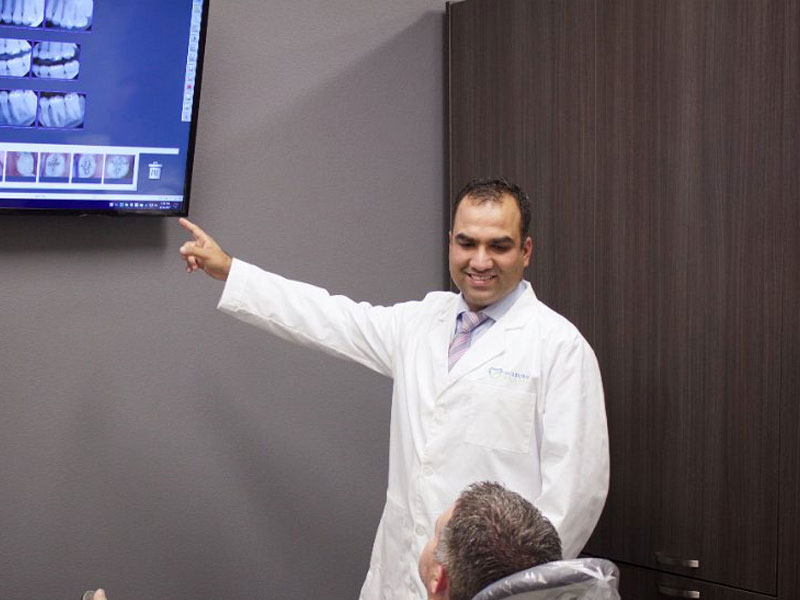
A visual dental examination can identify many oral health concerns, but some problems develop beneath the surface of the teeth or gums. Digital X-rays provide detailed images that can help your dentist evaluate areas that cannot be fully examined by looking inside the mouth.
At Two Cities Dental, dental X-rays may be recommended as part of a comprehensive examination or when your dentist needs additional information to diagnose a specific concern. The type and frequency of X-rays depend on your age, dental history, symptoms, and current oral health.


Dental X-Rays
Safe & Accurate
Can't find what you're looking for? Give us a call at and our friendly dental receptionist will gladly answer any questions you may have.
Dental X-rays are diagnostic images that help dentists examine areas of the mouth that cannot always be seen during a visual examination. They can provide information about teeth, roots, bone, and surrounding structures.
X-rays can help identify issues such as tooth decay, bone changes, infections, impacted teeth, and other conditions. Your dentist uses these images together with your examination and dental history when developing an appropriate treatment plan.
Dental X-rays may be recommended for patients when additional diagnostic information is needed. They can help identify problems that may not yet cause noticeable symptoms, including early decay, changes around tooth roots, bone loss, or developing teeth.
The need for X-rays varies from patient to patient. Your dentist will consider your oral health, age, dental history, symptoms, and previous imaging before recommending an X-ray.
There is no single X-ray schedule that is appropriate for every patient. Some people may need dental X-rays more frequently because of cavities, gum disease, dental treatment, or other oral health concerns, while others may need them less often.
Your dentist will recommend X-rays based on your individual needs rather than following a fixed schedule. Previous X-rays may also be reviewed to determine whether new images are necessary.
Dental X-rays can help dentists identify problems that may not be visible during a routine examination. Depending on the type of X-ray, images may show:
X-rays can also help your dentist plan treatments such as root canal therapy, oral surgery, and dental implants.
Dental X-rays use a small amount of radiation, and your dentist will only recommend imaging when the diagnostic information is useful for your care. Digital X-ray technology can help produce detailed images efficiently while using relatively low radiation exposure.
Your dental team will follow appropriate safety procedures and consider your individual circumstances before taking X-rays. If you have concerns about radiation exposure, pregnancy, or previous imaging, let your dentist know before your examination.
Dental X-rays may be recommended for children when they provide useful information about developing teeth, jaw growth, tooth eruption, cavities, or other oral health concerns. Because children are still developing, dentists carefully consider whether an X-ray is necessary and select the appropriate type of imaging.
The timing and frequency of X-rays vary based on each child's age, dental history, symptoms, and individual needs. Regular children's dentistry visits allow your dentist to monitor oral development and determine when diagnostic imaging may be appropriate.
Pick a time and your preferred dentist. We'll text or call you to confirm.

We are a family-owned & operated dental office serving the great two cities of Fresno & Clovis.
© 2026 Two Cities Dental in Fresno/Clovis. All Rights Reserved.