
At Two Cities Dental Office, we do not advocate for the use of amalgam fillings. As such, our Dental Office only uses composite fillings, which are a mixture of tooth-colored plastic and glass, to restore teeth.

Join 1,000's of patients
who trust our care
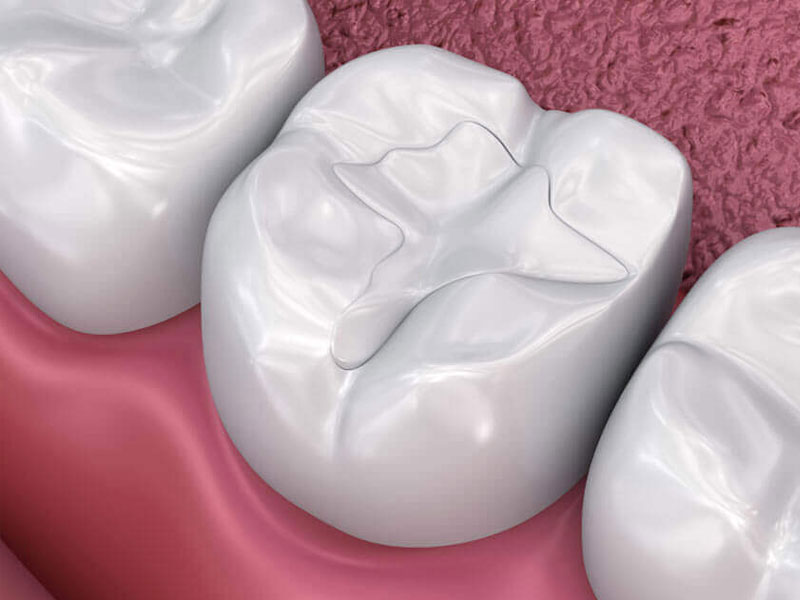
Composite fillings are tooth-colored dental restorations designed to repair teeth while maintaining a natural-looking smile. Your dentist can select a shade that closely matches your surrounding teeth, helping the filling blend with your smile.
Composite fillings can be used to restore teeth after decay is removed or to repair certain areas affected by minor damage. They also require the removal of only the damaged tooth structure needed to create the restoration, depending on the condition of the tooth.
If you have a cavity or damaged tooth, our team can evaluate your smile and determine whether a composite filling or another treatment is appropriate. For more extensive damage, treatments such as Crowns & Bridges may be recommended.


Composite Fillings
Looks natural
A cavity does not always mean that a tooth needs extensive treatment. When tooth decay is detected early enough, a composite filling in Clovis, CA may be used to remove the damaged portion of the tooth and restore its shape and function.
At Two Cities Dental, we provide tooth-colored composite fillings for patients who need to repair cavities or certain areas of damaged tooth structure. Composite material can be matched to the natural appearance of your teeth, making it a popular option for restoring visible and back teeth.
Our approach is focused on treating dental problems while preserving as much healthy natural tooth structure as reasonably possible.
Composite fillings are tooth-colored dental restorations made from a resin-based material combined with finely ground glass or other reinforcing particles.
Unlike traditional metal-colored fillings, composite restorations can be closely matched to the shade of the surrounding tooth. This makes them a common choice for patients who want a more natural-looking restoration.
Composite fillings may be used to repair teeth affected by:
The appropriate restoration depends on the size, location, and condition of the damaged tooth.
A dental filling may be recommended when tooth decay has damaged part of a tooth but enough healthy tooth structure remains to restore it with a filling.
Early tooth decay may not cause noticeable symptoms. That is one reason regular dental examinations are important.
During an examination, your dentist may look for:
Regular dental cleanings in Clovis can also help maintain oral health and provide an opportunity for your dental team to identify areas that may need further evaluation.
Cavities do not always cause symptoms in their early stages. As decay progresses, however, you may notice:
If you experience persistent dental pain, do not assume that a filling will necessarily be sufficient. More extensive decay can sometimes reach the inner portion of a tooth and require root canal treatment.
A dental examination is necessary to determine the appropriate treatment.
Composite fillings offer several potential advantages for appropriate cases.
Composite material can be selected to closely match the surrounding tooth, helping the restoration blend with your smile.
When clinically appropriate, composite fillings can restore damaged areas while preserving healthy tooth structure.
Composite material can be used to restore cavities in different areas of the mouth and may also be useful for certain types of minor tooth damage.
Because composite restorations are tooth-colored, they can provide a less noticeable alternative to traditional metal-colored restorations.
Your dentist can determine whether composite material is appropriate based on the tooth’s condition and the extent of the damage.
Composite and metal fillings have different characteristics.
Composite fillings are tooth-colored and can provide a natural-looking appearance. They can be bonded to the tooth structure and are commonly used for many types of cavity restoration.
Traditional amalgam fillings have a metallic appearance and have historically been used to restore cavities.
The best restorative material depends on factors such as:
Your dentist can explain the advantages and limitations of the available options for your specific tooth.
The exact process depends on the location and size of the cavity, but a typical composite filling appointment may involve several steps.
Your dentist examines the tooth and determines the extent of the decay or damage. Dental X-rays may be recommended when additional diagnostic information is needed.
Learn more about digital dental X-rays.
If necessary, local anesthetic can be used to help keep you comfortable during treatment.
Patients who feel particularly nervous about dental treatment can also discuss available dental comfort options with the dental team.
The dentist removes the decayed or damaged portion of the tooth while working to preserve healthy tooth structure.
The tooth is prepared so that the composite material can be properly placed.
The tooth-colored composite material is placed into the prepared area.
The material is shaped to restore the tooth’s form and cured to harden it.
Your dentist checks the restoration and adjusts it if necessary so that your bite feels comfortable.
The lifespan of a composite filling varies from person to person. Factors that can affect how long a restoration remains functional include:
A filling should be monitored during regular dental examinations. If it becomes damaged or the surrounding tooth develops additional decay, your dentist may recommend repair or replacement.
After receiving a composite filling, good oral hygiene remains important.
You should:
Good home care does not only protect the filling. It also helps protect the natural tooth surrounding the restoration.
For additional guidance, see our oral hygiene education page.
Composite material may be appropriate for certain minor chips or areas of damaged enamel.
However, not every chipped tooth can be repaired with a filling. A larger fracture or a tooth that has been weakened significantly may require a different restoration.
Depending on the condition of the tooth, your dentist may discuss a dental crown or another treatment option.
A filling is generally used when enough healthy tooth structure remains to support the restoration.
A dental crown may be considered when a tooth has experienced more extensive damage or needs additional structural protection.
Examples may include:
Your dentist can evaluate the amount of remaining tooth structure before recommending a filling or crown.
Learn more about dental crowns and bridges in Clovis.
A filling treats the damaged portion of the tooth but does not treat an infection that has reached the dental pulp.
If decay progresses deeply into the tooth and affects the pulp, root canal treatment may be necessary.
Symptoms that may indicate a more advanced problem can include:
Learn more about root canal treatment in Clovis.
The only way to determine the appropriate treatment is through a dental examination and, when needed, diagnostic imaging.
If a filling becomes loose or falls out, contact your dentist for an evaluation.
Until you can be seen:
If the tooth is severely painful, fractured, swollen, or associated with an infection, it may require more urgent evaluation.
Learn more about emergency dental care in Clovis.
Children can also develop cavities and may need tooth-colored fillings depending on the location and extent of decay.
Preventive dental care is especially important for children because identifying cavities early can sometimes allow treatment before the tooth experiences more extensive damage.
Our children’s dentistry services include preventive care and treatment for common dental problems affecting children.
Parents can also learn about brushing, flossing, nutrition, and cavity prevention through our oral hygiene education resources.
A dental filling repairs an existing cavity, but it does not make a tooth permanently immune to future decay.
Preventive habits remain important after treatment.
Use fluoride toothpaste and brush all tooth surfaces carefully.
Flossing or another dentist-recommended interdental cleaning method helps remove plaque from areas a toothbrush cannot reach effectively.
Frequent consumption of sugary foods and drinks can increase the risk of tooth decay.
Routine examinations allow your dentist to monitor existing restorations and identify new cavities.
Professional cleanings can remove plaque and tartar that may be difficult to eliminate through daily brushing alone.
Composite fillings are one part of a broader approach to family dental care.
At Two Cities Dental, patients can receive preventive, restorative, emergency, and cosmetic dental care according to their individual needs.
Explore our:
For patients who need more extensive restoration, dental crowns and bridges may be appropriate.
For patients with missing teeth, dental implants or dentures may be discussed depending on their individual circumstances.
Can't find what you're looking for? Give us a call at (559) 691-6010 and our friendly dental receptionist will gladly answer any questions you may have.
A composite filling is a tooth-colored restoration used to repair a tooth affected by decay or certain types of damage. The material is designed to blend with the natural appearance of the tooth.
Your dentist can discuss the expected lifespan and care requirements of your restoration and recommend ways to maintain its appearance.
The terms are often used to describe tooth-colored composite restorations. Your dentist can explain which restorative material is appropriate for your tooth.
Composite fillings may also allow your dentist to preserve more healthy tooth structure because the preparation can be more conservative in appropriate cases. Your dentist can recommend the best filling material based on the location and condition of the tooth.
Treatment time varies depending on the number and size of cavities and their location. Your dentist can provide a more specific estimate after examining your teeth.
Your dentist can use local anesthetic when appropriate to help keep you comfortable during the procedure. Some sensitivity may occur temporarily after treatment.
Before treatment, your dentist will explain the procedure and provide an estimate based on your individual needs.
It depends on the amount of remaining healthy tooth structure and the location of the cavity. A larger cavity may require a dental crown or another restorative treatment.
Yes. Because composite material can be matched to the natural tooth color, it may be suitable for certain restorations on front teeth as well as back teeth.
Pick a time and your preferred dentist. We'll text or call you to confirm.

We are a family-owned & operated dental office serving the great two cities of Fresno & Clovis.
© 2026 Two Cities Dental in Fresno/Clovis. All Rights Reserved.