
When the nerve of a tooth is affected by decay or an infection, a root canal procedure is necessary. In order to ensure tooth survival, the living tissue inside the tooth known as the pulp will have to be removed along with the nerves, bacteria, and overall decay.

Join 1,000's of patients
who trust our care
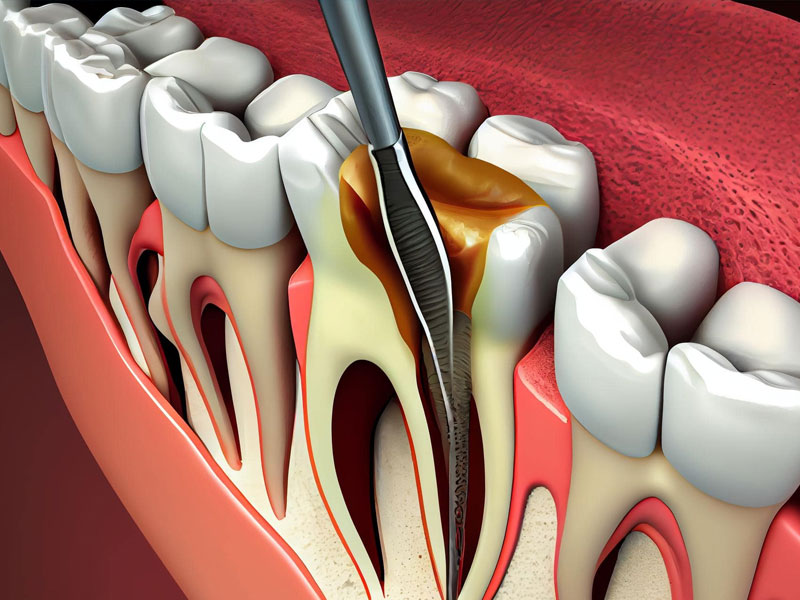
A root canal may be recommended when bacteria reach the inner part of a tooth and cause inflammation or infection. Common symptoms can include persistent tooth pain, sensitivity to hot or cold, swelling, tenderness when biting, or discoloration. In some cases, however, an infected tooth may not cause noticeable symptoms.
During root canal treatment, your dentist carefully removes the infected or damaged tissue from inside the tooth. The canals are cleaned, shaped, and sealed to help prevent further infection. After the root canal, the tooth may need a restoration such as a dental crown to help protect its remaining structure.
Early evaluation is important when a tooth is causing persistent pain or other symptoms. A dental X-ray may be used to examine the tooth and surrounding structures and help determine the appropriate treatment.

Root Canal
Comfort aids available
Can't find what you're looking for? Give us a call at and our friendly dental receptionist will gladly answer any questions you may have.
A root canal is a dental treatment used to remove infected or inflamed tissue from inside a tooth. The space inside the tooth is then cleaned, shaped, and sealed to help prevent reinfection.
Root canal treatment can often allow a damaged or infected tooth to remain in place rather than requiring extraction. Your dentist will evaluate the tooth and discuss whether root canal treatment is appropriate for your situation.
Possible signs include persistent toothache, prolonged sensitivity to hot or cold, pain when chewing, swelling around the tooth, tenderness, or changes in tooth color. Some teeth with infection may cause few or no symptoms.
If you experience persistent dental pain or swelling, schedule an examination rather than waiting for the symptoms to disappear. Your dentist may use an examination and dental X-rays to determine the cause.
Modern dental techniques and local anesthesia are used to keep patients comfortable during root canal treatment. You may experience some tenderness or sensitivity after the procedure as the surrounding tissues recover.
Your dentist will explain what to expect before treatment and provide aftercare instructions. If you experience significant or persistent pain after treatment, contact your dental office for guidance.
Treatment time varies depending on the tooth, the complexity of the root canals, the extent of infection, and your individual treatment plan. Some root canals can be completed in one appointment, while others may require additional visits.
During your examination, your dentist can evaluate the tooth and explain how many appointments may be needed to complete treatment and restore the tooth.
After root canal treatment, the tooth is cleaned and sealed, but it may still require a permanent restoration. Depending on the amount of remaining tooth structure and the location of the tooth, your dentist may recommend a crown to provide additional protection.
Continue brushing and flossing normally while following any specific instructions from your dental team. Regular routine dental cleanings are also important for maintaining the health of the treated tooth and surrounding teeth.
Local anesthesia used in dental procedures is effective in preventing root canal pain during the treatment. It may not work properly in rare cases, such as when the infection has spread widely and caused changes in the acidity of the surrounding tissue.
Sometimes, teeth become discolored and turn dark or grey following a root canal treatment. This discoloration is caused by bleeding inside the tooth or by the filling material used in the procedure. Discolored teeth can be whitened.
In many cases, root canal treatment can help preserve a natural tooth that would otherwise require extraction. However, the appropriate treatment depends on the amount of healthy tooth structure remaining, the condition of the roots, and the overall health of the tooth.
If a tooth cannot be predictably restored, your dentist may discuss extraction and replacement options such as a dental implant or dental bridge.
Pick a time and your preferred dentist. We'll text or call you to confirm.

We are a family-owned & operated dental office serving the great two cities of Fresno & Clovis.
© 2026 Two Cities Dental in Fresno/Clovis. All Rights Reserved.